Some character sketches for a game under development. Trying to decide between a more stylized or realistic approach to the flat shaded art approach.

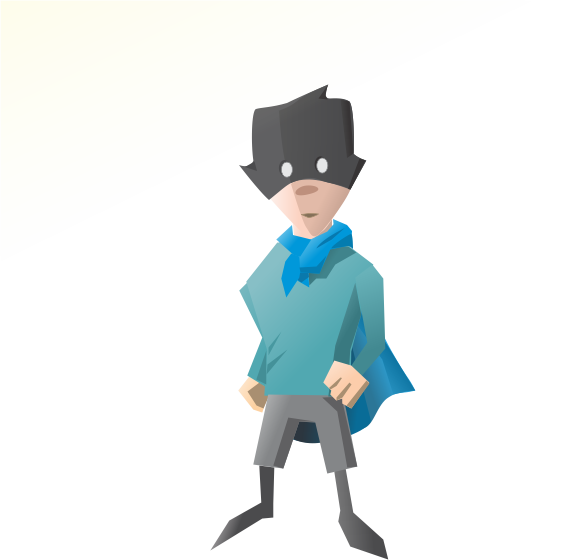
Some character sketches for a game under development. Trying to decide between a more stylized or realistic approach to the flat shaded art approach.
I recently started going to an indie game critique group so I could start thinking a bit more critically about what is going on in game design at the moment. The YYC Critique group picked “Capsule” for this month’s discussion and post-mortem.  Capsule is marketed as a survival game and I’d say that is fairly accurate. It was built by Adam Saltsman and Robin Arnott of Venus Patrol. The basic story is that you wake up in a capsule and your only way to interface with the world is through a grainy CRT-style screen. The navigation is simple, you use the 4 arrow keys that let you steer left and right and thrust forward and backward. You start out the game at a station with a basic narrative that tells that you need to make it to the next station.
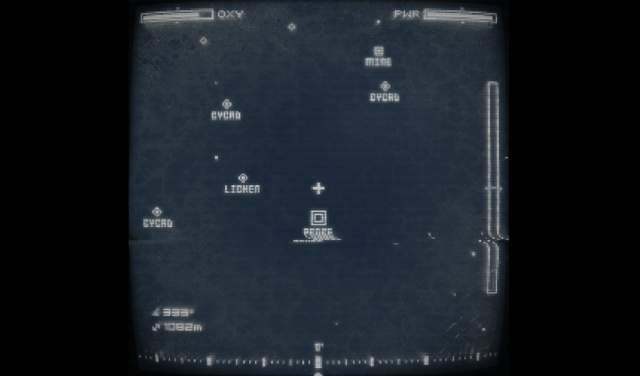 Everything shows up as a simple cross on the screen until you “ping” the world with your radar and the things around you become identified. The resource drain element is both oxygen and energy that you burn as you move through the terrain. You can hit elements around you to gain resources or have them taken away. The game play is extremely simple but that was the designers had set out to create. They were inspired by the old arcade game Lunar Lander.
So, what was it like to play? Well there are a couple of things. When it comes to designing games you are often thinking about “The Loop”. This is the cycle of game play that you repeat over and over. In simple arcade games like Mario it is just a matter of running and jumping while trying to avoid (or hit) objects on the screen. You do this over and over again. In first person shooter games it can last a bit longer as you maneuver and try to use one of your various attacks and weapons to kill an opponent. One of the goals of a game designer is to extend that loop as long as possible so that the game remains interesting for the player. You might need a longer sequence of behaviours that need to be completed to finish the loop. In many games new equipment or combinations of elements are added to make the loop a bit different, not in what you do but in how you do it. Think about the upgrades to weapons and special items that can be used in many games. Capsule doesn’t have a long loop. It is extremely short. In many ways it is a great example of how to build a game to prototype a loop because what is there is excellent. Unfortunately for me it got a bit boring. That isn’t necessarily a bad thing in a game because it can then give the designer a chance to get the player to focus on new things.
In the case of Capsule the new thing could have been the narrative. As the gameplay becomes more or less automatic there is a real chance to start thinking about the short email messages that appear each time you dock with a new station. I think this was the real missed opportunity that could have carried the game in a different direction. There is obviously a mystery about what has happened and how you ended up in the capsule in the first place. Unfortunately the writing didn’t really engage me and I found myself skimming the emails after the first couple of stations. This element could have been expanded into something more interesting. Even with a stripped down minimalist game they wouldn’t have had to add a lot. There are a lot of very interesting interactive fiction pieces created with software like Twine that could have served as a good example.
The other media elements of the game had some great production value. The music and sounds of the game did a great job at building suspense and added to the claustrophobic panic that came as you started to run out of air.
Overall, the goal of creating a minimalist game were achieved. I think it could still be tweaked into something really interesting. Maybe someday there will be a Capsule 2.
 I came across a great article by Edmund McMillen about the kinds of things you need to think about when developing an indie game. It is a great little article you can find here:
Opinion: Indie Game Design Dos and Donts
He made several great points about game development, I think the strongest ones relate to the fact that you aren’t answering to accountants or investor who will insist on lowering risk in order to maximize profitability of your game. You can take the risks that a larger company never would even dream about. This doesn’t mean you don’t answer to anyone though. The other important part is to check your ego and get as much feedback from your peers and your community. They are going to help you find your blindspots and weaknesses in your design. You’re human, you’re good at denying things you don’t want to see, it’s called confirmation bias, you should look it up and remember it.
Well, as long as art is about creating emotion then I suppose video games will win the debate, I suppose when my dog chews up my cell phone I can frame that on the wall as well.
A lot of things create emotion, what really counts is how you interpret that experience. One perspective on modern art has the interplay between the art and the viewer as being the most important aspect of that art. Modern art isn’t worried about realistic representation, beauty or even symbolic representation, it accepts that each experience can be personal and unique. I’m not sure that Halo falls into that kind of experience.
It might be better to think of video games as thoughtful examples of emotional design. I’ve seen games like Dear Esther create a very different experience that is less about emotion and more about creating a unique experience. Perhaps that is an example of the start but for most video games the art debate is still wide open as far as I’m concerned.
 A great little article by Keith Burgun of Dinofarm Games. It has some of the lessons they learned when they went after Kickstarter funding for their most recent game Auro.
A great interview with the Hide&Seek, a UK game company that focuses on developing new kinds of play and collaboration experiences.
A little summary of some of the best indie games released this month:
10 indie games you MUST play this month | Technology | guardian.co.uk.
I came across a great resource that addresses one of the biggest problems with indie games… how to actually find them. The TIGdb is a database of indie games and a lot of them have reviews written by the community on the site. Check it out and you’ll find a huge range of games in a variety of genres.
The Indie Game Database – TIGdb – Discover hand-picked, hand-crafted independent games.
I’m starting  to realize that one of the largest roadblocks to the growth and evolution of the gaming industry is the poor profitability of many experimental games. I realize that stories about the success of the indie game Braid and its game designer, Jonathon Blow, driving around in his crimson Tesla Roadster sound pretty lucrative and fantastic but the reality is that most indie game don’t make money. In fact, according to a recent article on Fierce Developer, 97 percent of App Store revenues are taken in by only 20 percent of the iOS developers on the iTunes store. Half of the games on the iTunes store make less that $3000 in revenues. That is a sobering statistic that any indie game development shop should consider before they spend the next year living in a damp basement apartment.
There seem to be a number of reasons but a lot of it seems to due to increased competition and consolidation of the best companies. Basically if you start producing profitable games you’re likely to be purchased by one of the larger companies, keeping that 20 percent with a tight grasp on the top.
So, what do you do as an indie game company with a great idea? You need to have a monetization strategy in place before you even start to design. The number of players out there buying apps is dropping, there is a growing movement towards freemium models. It the dominant trend in game development at the moment with 9 out of 10 games are being distributed for free. You basically give your game away for free and hope that you’ve created a compelling enough experience that people will want to purchase items inside the game to improve their experience. Building this model into your game takes a careful consideration to see if it matches the design you’ve chosen and making changes, if necessary. There are also companies like GetJar who are building monetization and advertising services into their system for developers. These kinds of tools warrant an examination. It is estimated that in-app purchases accounted for only $970 million in sales last year but they will grow to $5.6 billion by 2015.
Aside from creating a meaningful and amazing gaming experience, you next biggest challenge is figuring out how to make it profitable. Hopefully this post made those decisions a little easier.
 Outgrown Games